More than ingredients. The building blocks of Belizean food, culture, land, and identity.

Every Belizean dish begins with ingredients—and each ingredient opens a story. Follow the land it grows in, the hands that prepare it, the meals it becomes, and the knowledge passed along.
FEATURED INGREDIENT
Follow cacao from the pod to the people who grow, process, and transform it into drinks and chocolate.
Roots, fruits, seeds. Start where the story grows.
Growers, vendors, cooks. Meet the connections.
Grating, grinding, pounding. Watch ingredients change.
Food knowledge carried through everyday practice.
A root, a fruit, a seed. Follow the ingredient back toward its growing conditions, harvest, and the people who work with it. A market photograph opens a question; the grower’s story fills in the place.
Growers, market vendors, fishers, and cooks all hold different parts of food knowledge. Follow an ingredient through those relationships, keeping each person’s preparation and experience in view.
Grate coconut and extract its milk. Grind prepared corn into masa. Pound plantain. The method changes what an ingredient can become—and connects it to a particular meal.
Food knowledge travels through families, communities, markets, and migration. Ingredients gain new uses and meanings over time. Explore the practice, the people who share it, and the connections that continue to grow.
Explore ingredients and follow their connections to Belizean food and everyday life.
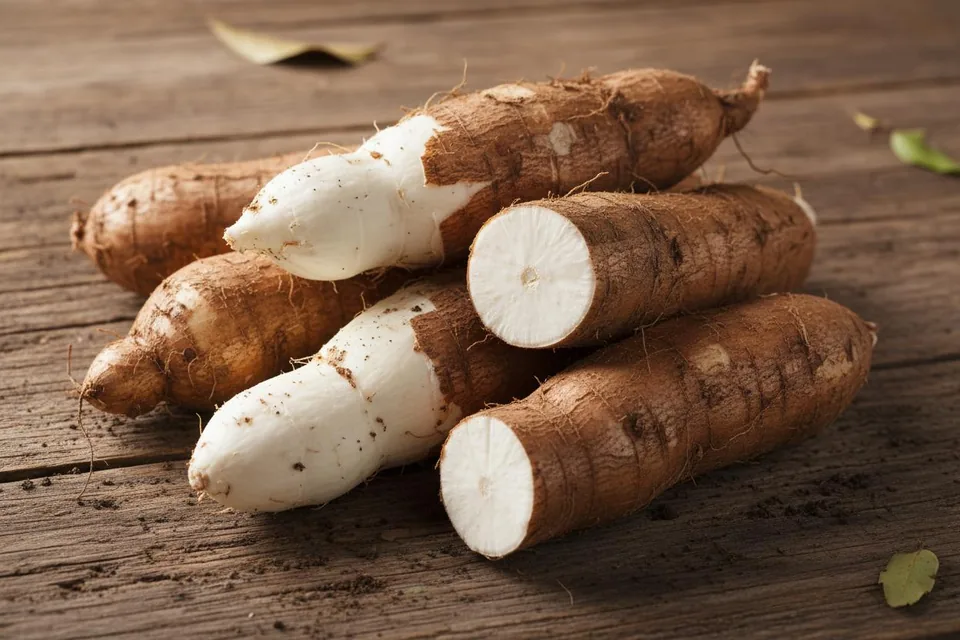
A root transformed into breads, puddings, and other preparations.
Root food · Bread & sweets
Cassava connects a root crop to the work of processing it, to bread-making, and to sweet preparations. Its different forms carry different methods and traditions.
Follow the ingredient: Root → processing → cassava bread or pudding. Follow the preparation with the cook; cassava varieties and processing methods matter.
Connected foods: Cassava Bread / Ereba, Bammy, Cassava Pone
Connected ingredients: Coconut, Corn (Maize)
Ereba has specific connections to Garifuna food knowledge. Cassava preparations also have distinct histories across the wider Caribbean.
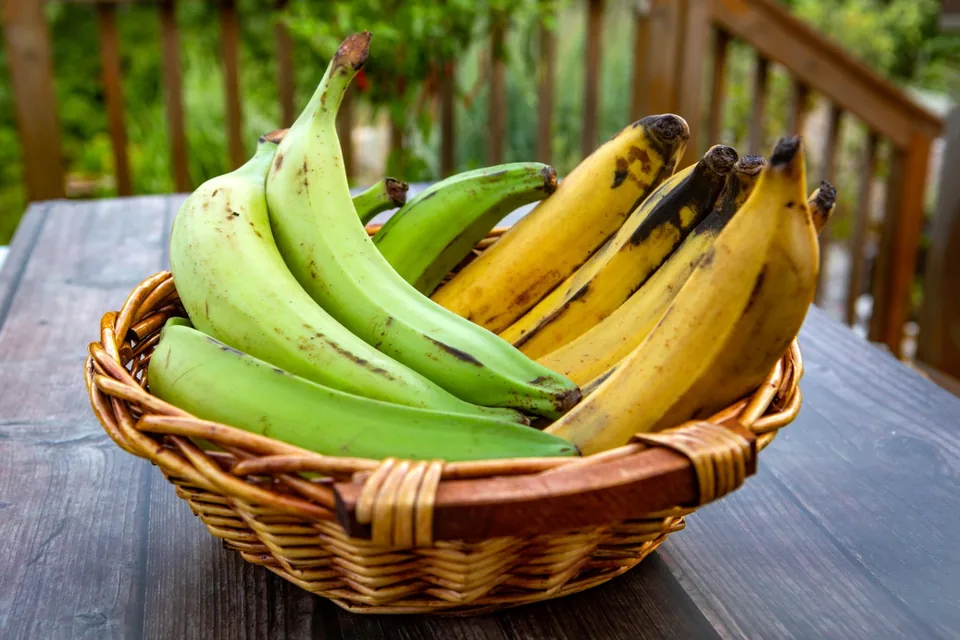
Green or ripe, boiled, pounded, or fried—each form changes the meal.
Fruit · Green & ripe
Plantain offers different textures and flavours as it ripens. The green fruit and the ripe fruit can take different roles in the same food tradition.
Follow the ingredient: Green or ripe → boiling, pounding, or frying. Compare the ingredient forms before following a particular preparation.
Connected foods: Hudut, Fried Plantains, Tostones
Connected ingredients: Coconut, Fish
In the Food Library’s Hudut account, plantain connects with fish and coconut. The names and proportions of each component belong with the particular preparation.
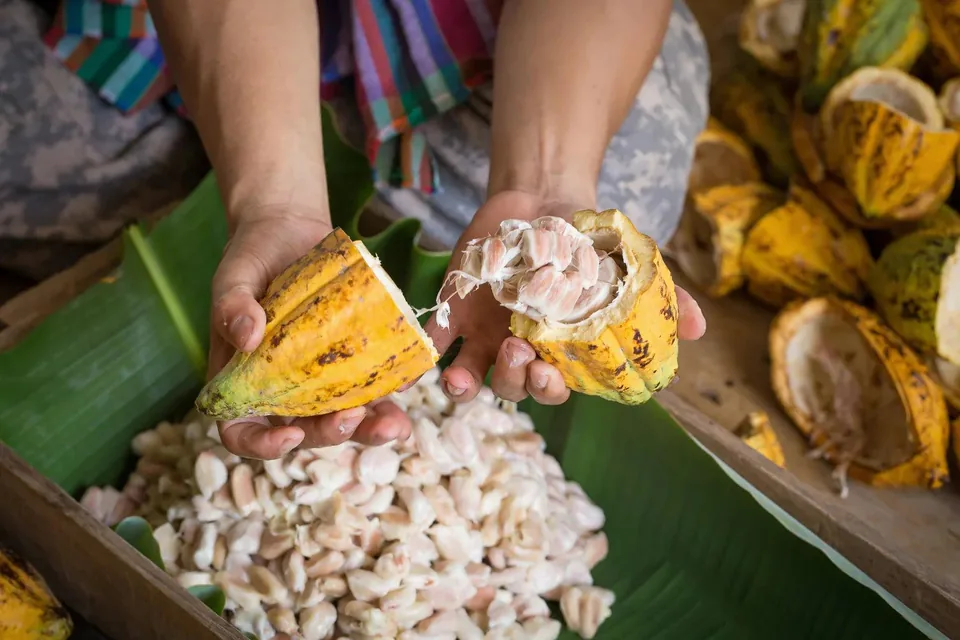
A pod that connects growers, processing knowledge, drinks, and chocolate.
Seed · Drinks & chocolate
Open a cacao pod and the story is only beginning. Its seeds connect growers and processors to makers, drinks, chocolate, places, and livelihoods.
Follow the ingredient: Pod → seeds → processing → drink or chocolate. Fermentation, drying, roasting, and grinding are different stages to explore with producers.
Connected foods: Cacao Drinks, Chocolate
Explore cacao’s contemporary connections in Toledo through growers, makers, and local products. Each product has its own place, method, and story.
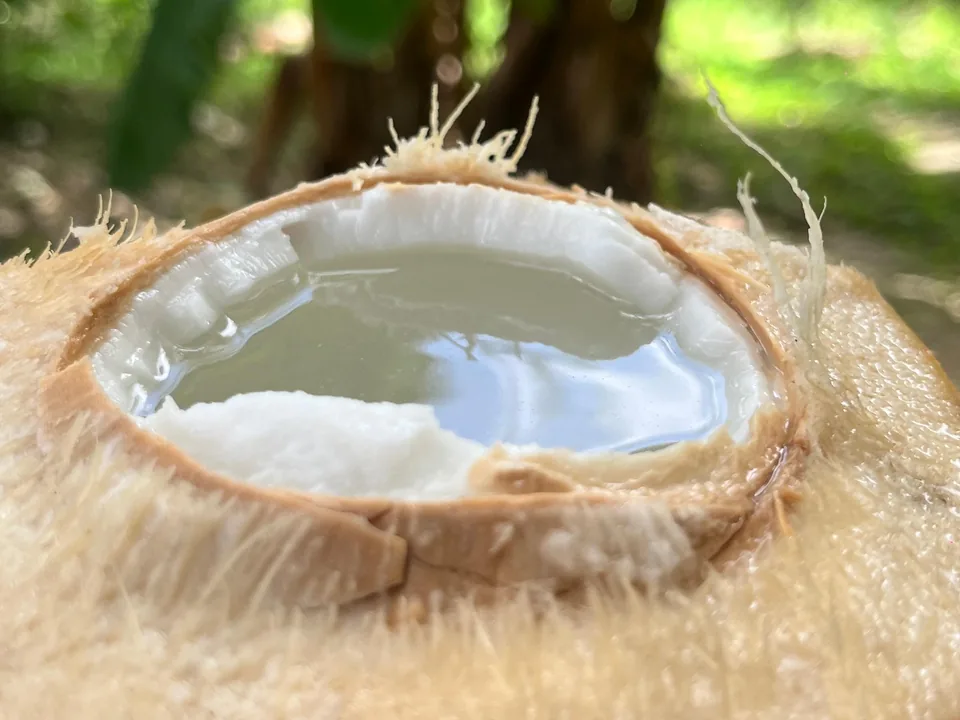
Flesh, milk, and oil connect this fruit to savoury meals, breads, and sweets.
Fruit · Milk & oil
Coconut becomes many ingredients. Grated flesh, extracted coconut milk, coconut oil, and coconut water have different properties and uses.
Follow the ingredient: Coconut flesh → grating → extracting coconut milk. Coconut water is the liquid inside the fruit; it is different from extracted coconut milk.
Connected foods: Rice and Beans, Hudut, Sere, Coconut Bread
Connected ingredients: Plantain, Fish, Beans, Cassava
The photograph shows coconut water inside the fruit. Coconut milk is extracted from the flesh in a separate preparation.
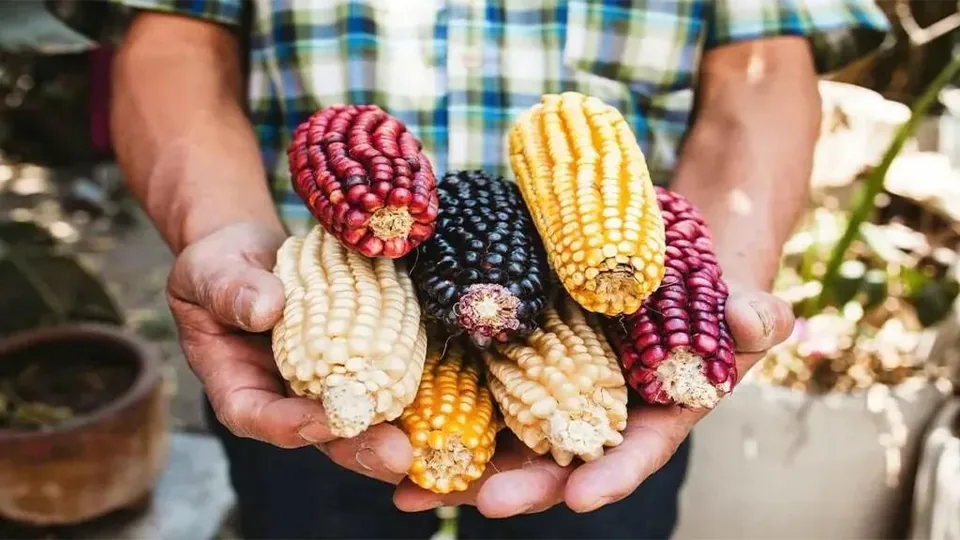
From kernels to masa, a foundation for tortillas, tamales, and dukunu.
Grain · Masa & kernels
Corn appears as whole kernels, ground masa, masa harina, and fresh-corn preparations. These forms connect to different foods and are not interchangeable in every recipe.
Follow the ingredient: Corn → preparing and grinding → masa → a specific food. Whole-kernel and fresh-corn preparations follow other paths.
Connected foods: Corn Tortillas, Panades, Tamales, Dukunu
Connected ingredients: Beans, Recado
Corn has important relationships with Maya and Mestizo foodways in Belize. Specific practices and meanings vary across communities and places.
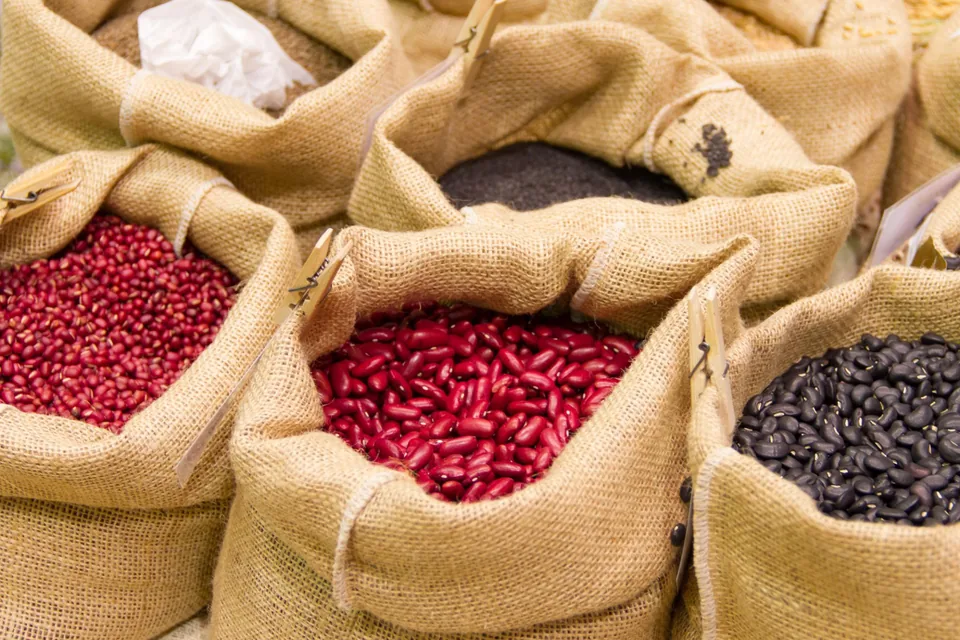
Cooked together with rice, stewed separately, or mashed for another dish.
Legume · Stews & sides
Beans connect everyday meals through their variety, texture, and method of preparation. Rice and beans cooked together is different from a plate of rice with separately stewed beans.
Follow the ingredient: Dry beans → soaking and cooking → stewed, mashed, or cooked with rice. Keep the bean variety and method with the preparation.
Connected foods: Rice and Beans, Stew Beans, Garnaches
Connected ingredients: Coconut, Corn (Maize)
Red kidney beans feature in the captured rice-and-beans recipe. The photograph shows several bean types; they are not a single interchangeable ingredient.
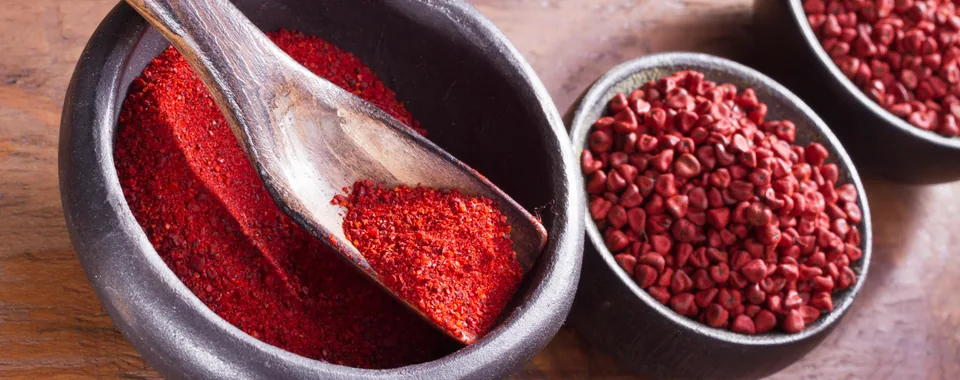
Seasoning preparations that bring distinct colour and flavour to food.
Seasoning · Red & black
Recado is a family of seasoning preparations. Achiote contributes to red recado; black recado is a different preparation with its own ingredients and process.
Follow the ingredient: Achiote and other seasonings → a red recado preparation → a marinade or seasoned dish. Follow each recipe rather than treating every recado as the same blend.
Connected foods: Stew Chicken, Pork Pibil, Chimole
Connected ingredients: Corn (Maize), Hot Peppers
This photograph shows achiote seeds and powder, not a finished recado paste. Red and black recado should have separate preparation records.
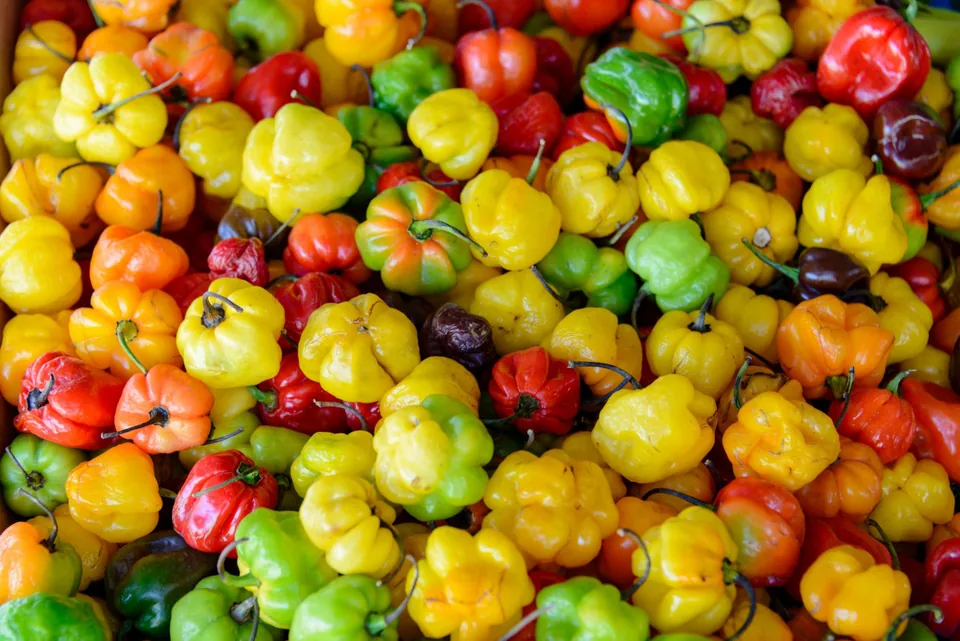
Fruit, heat, and aroma in pepper sauces, marinades, and the meal beside them.
Heat · Sauces & seasoning
Hot peppers connect fresh ingredients to sauces, seasonings, and accompaniments. The pepper, its ripeness, and how it is prepared all change the flavour.
Follow the ingredient: Fresh pepper → chopping, blending, or another preparation → sauce, marinade, or accompaniment. Habanero and Scotch bonnet names should stay attached to identified varieties.
Connected foods: Pepper Sauce, Onion Sauce, Fish Preparations
Connected ingredients: Fish, Culantro, Recado
The card uses the broad name Hot Peppers. An exact variety is not assigned from a photograph alone.
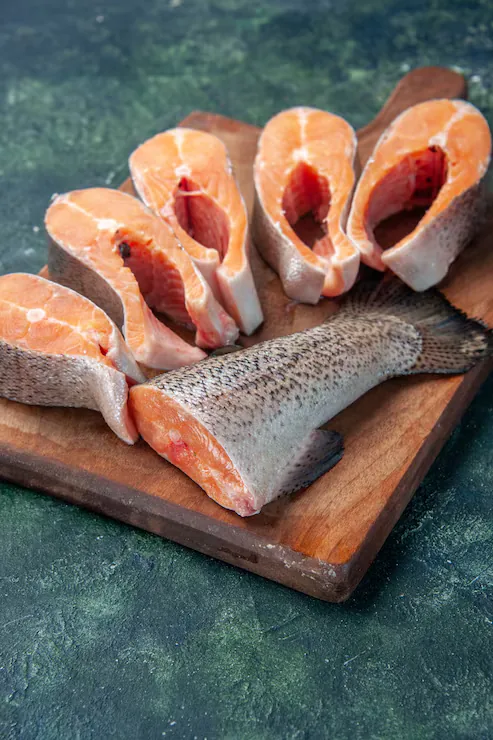
An ingredient connecting fishing knowledge to broths, soups, and other meals.
Seafood · Soups & stews
Fish connects people who catch, sell, and prepare it to a wide range of meals. The species, place, and preparation are part of the ingredient’s story.
Follow the ingredient: A named fish → a particular preparation → the meal and people around it. Retain the species and sourcing context rather than treating all fish as one ingredient.
Connected foods: Hudut, Sere, Boil Up
Connected ingredients: Coconut, Plantain, Culantro
This photograph shows salmon. For Belizean food connections, follow the particular local fish species named by cooks and fishers.
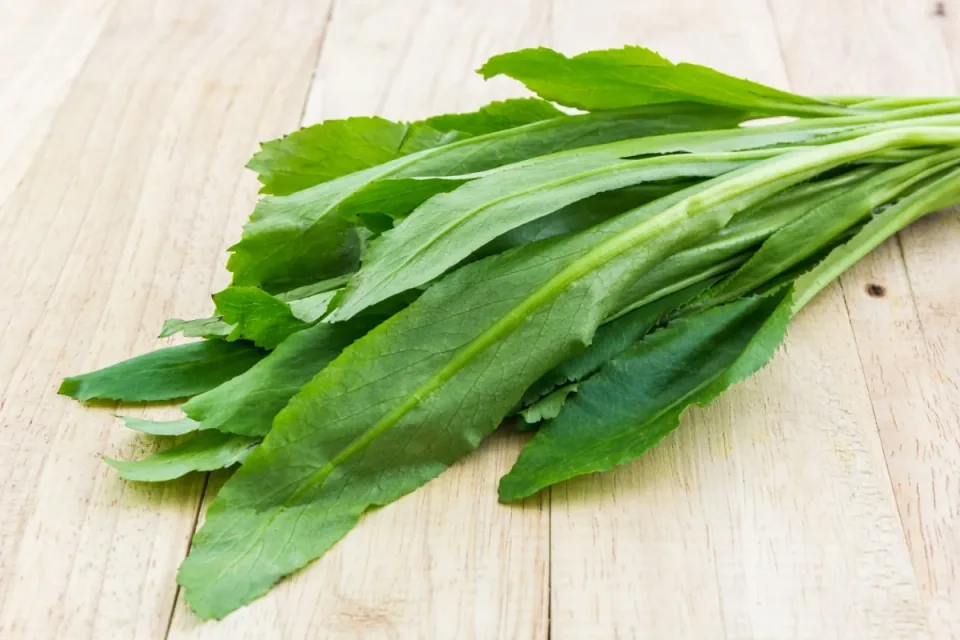
An aromatic leaf that adds another layer to soups, stews, and seasoning.
Herb · Soups & stews
Culantro’s long, serrated leaves are an ingredient in their own right. Its names, growing conditions, and uses can lead from a garden to a cook’s seasoning practice.
Follow the ingredient: Fresh leaves → chopping or another cook’s method → a seasoned soup, stew, or other preparation.
Connected foods: Soups, Stews, Seasoning Preparations
Connected ingredients: Fish, Hot Peppers
Culantro and cilantro are different plants. Record local names with the person sharing them rather than assuming that similar names identify the same herb.
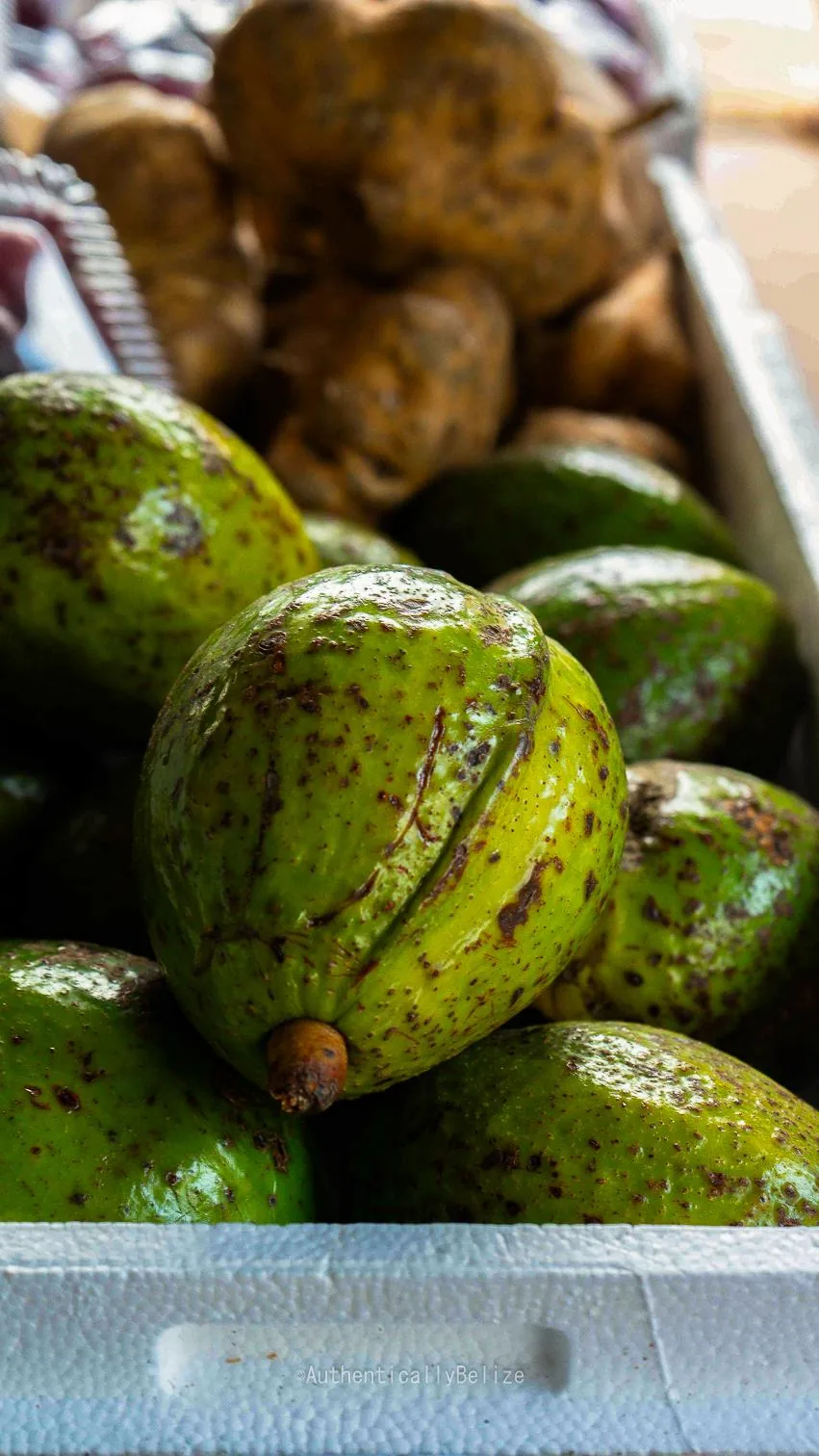
Creamy flesh and naturally occurring unsaturated fats. Find avocado under both Fruits and Fats & Oils.
Fruit · source of fats
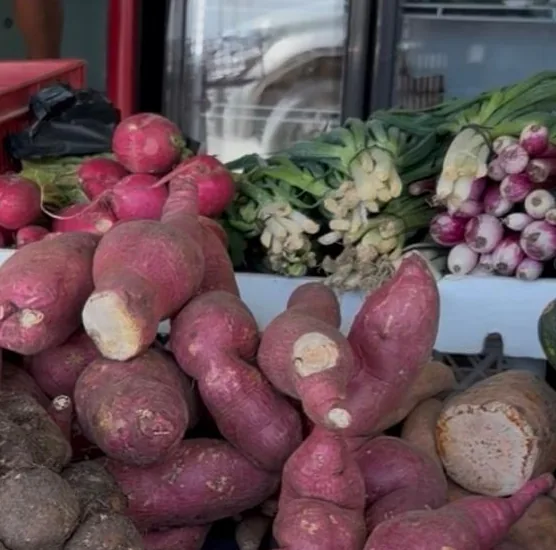
Purple skin can hide pale flesh. Sweet potatoes come in several colours; colour alone does not identify the variety.
Root food
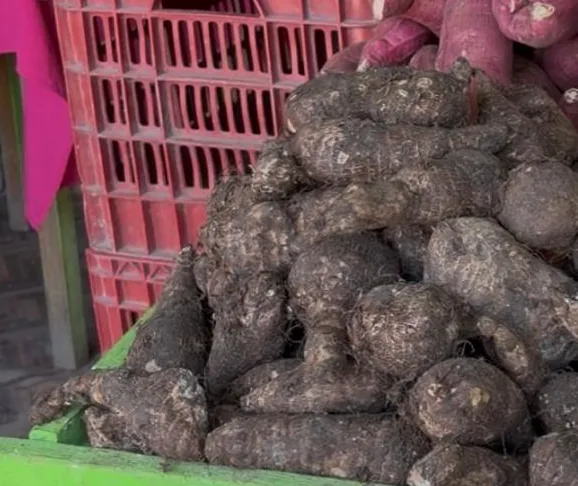
Starchy corms known locally as macals. Keep them distinct from the sweet potatoes beside them at the stall.
Ground provision
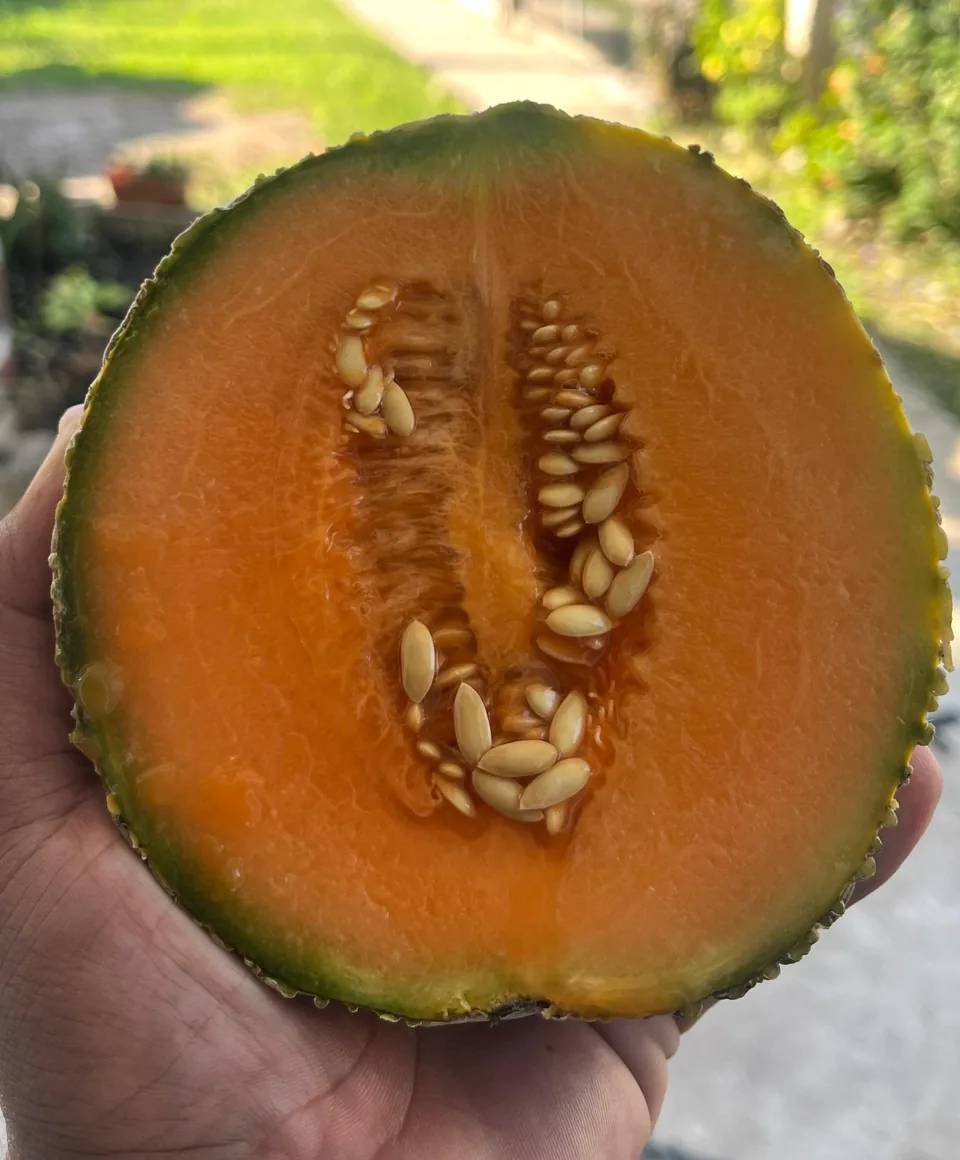
Orange flesh, a seed-filled centre, and a netted rind. A fresh-fruit stop on a trip through the market.
Fruit
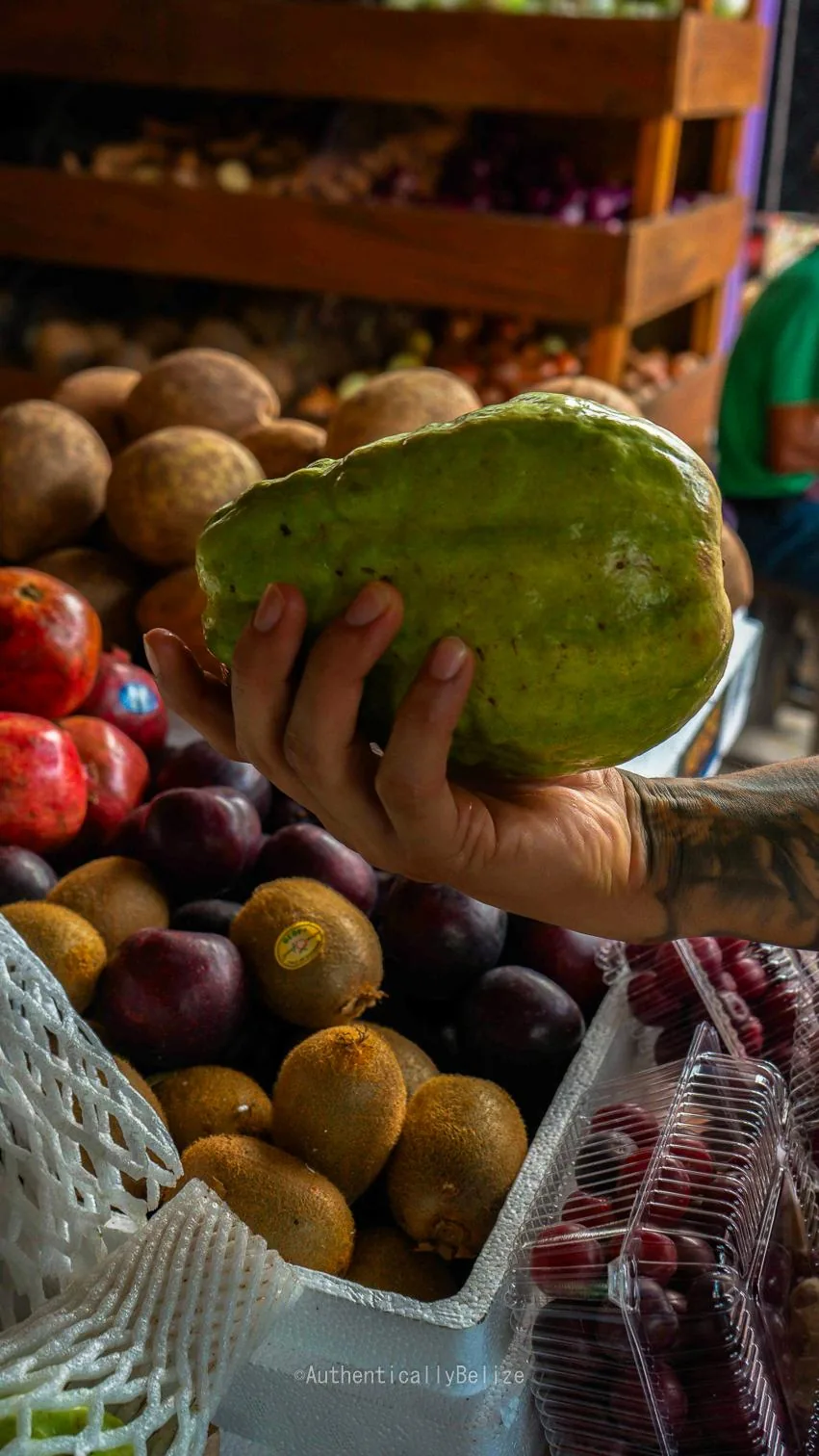
White guavas can be enjoyed firm and crisp, with a mild flavour. Some are sliced while still green.
Fruit
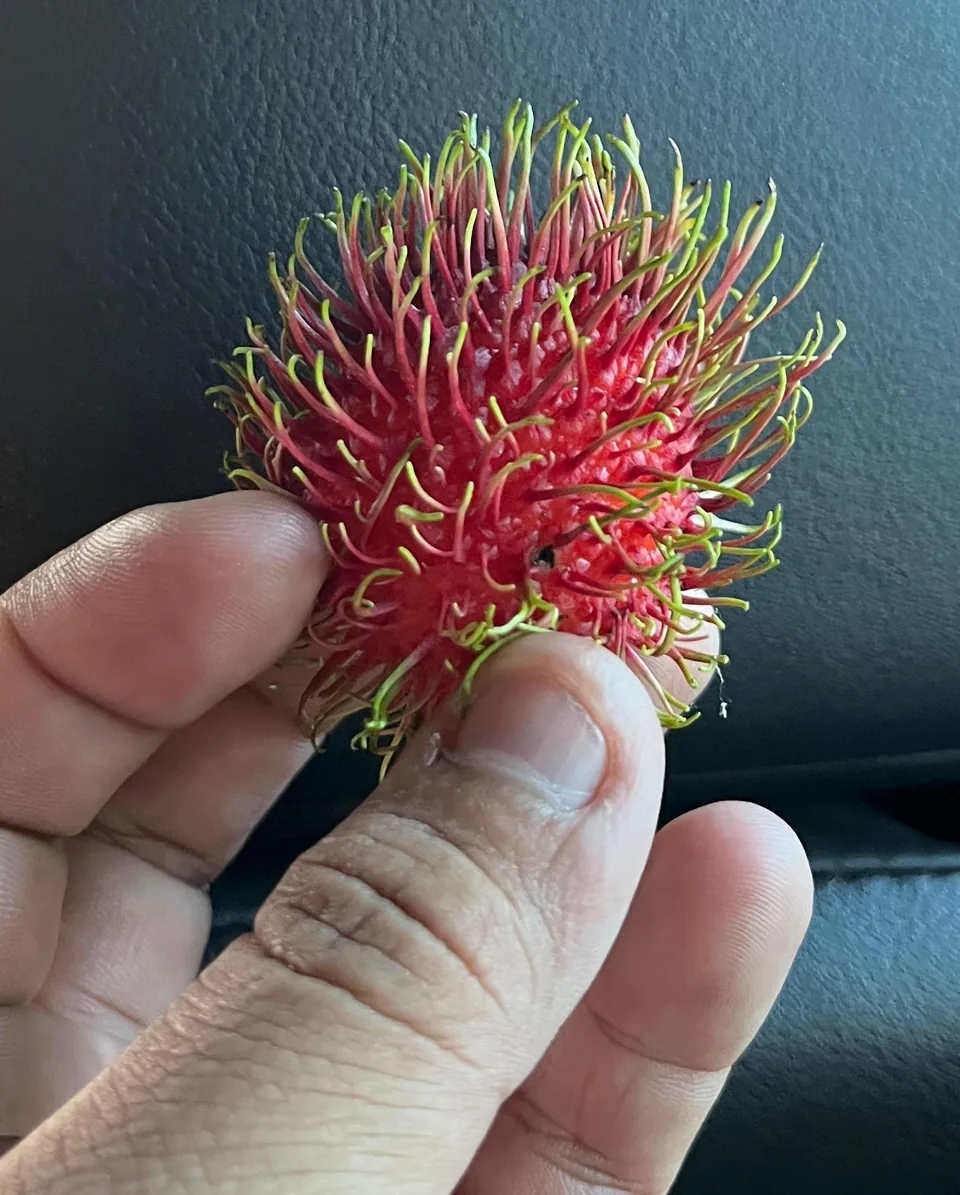
A red, soft-spined shell surrounds the pale fruit. One more distinctive shape to recognise among the produce.
Fruit
Follow the connections from the growing plant to the market and the kitchen.
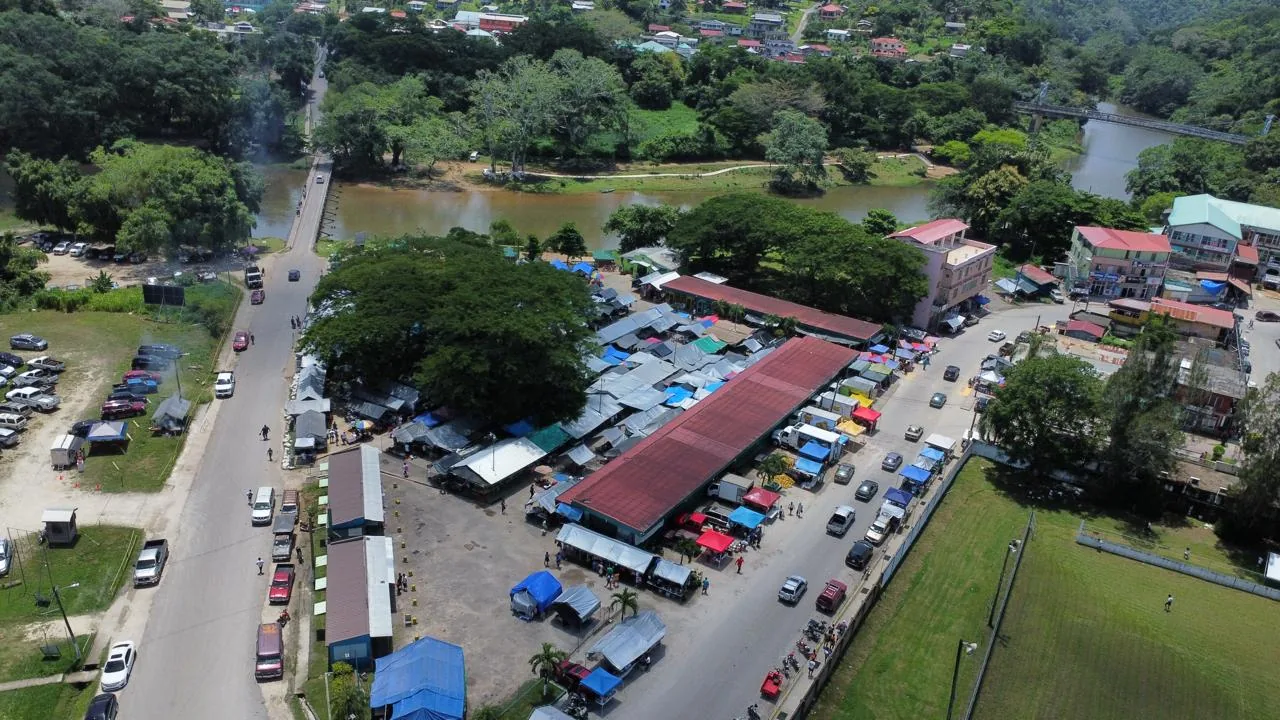
The market brings ingredients, people, and everyday life together.
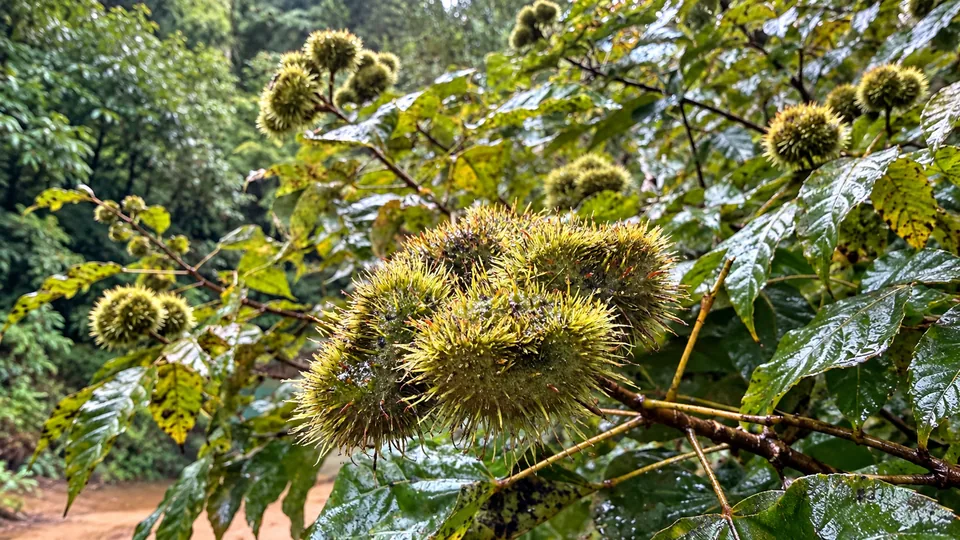
Achiote: from the growing pod to the seeds used in red recado.
A local name, a family preparation, a grower you know. Your knowledge helps make these connections richer.

Experience Belize through its people, culture, stories, landscapes, food, music, and hidden gems. Authentically Belize brings you closer to the heart and soul of the country, one real experience at a time.
Share, connect, explore, and discover the true Belizean perspective with us.