Introduction
If there is one experience that defines adventure travel in Belize, it’s Actun Tunichil Muknal (ATM Cave). Hidden inside the Tapir Mountain Nature Reserve near San Ignacio, this sacred Maya cave is one of the biggest reasons travelers come to Cayo District.
I’ve explored waterfalls, ruins, rivers, and jungles across Belize but nothing quite prepares you for ATM. It’s history, adrenaline, culture, and spirituality wrapped into one unforgettable day.
Actun Tunichil Muknal means “Cave of the Stone Sepulcher.” To the ancient Maya, this cave was a sacred gateway to the underworld a place where they performed ceremonies and sacrifices to the gods of rain, agriculture, and fertility.
Today, ATM Cave is:
A world-class archaeological site
A full-day jungle and cave adventure
One of the top sacred caves in the world (ranked by National Geographic)
A protected national treasure of Belize
It is widely considered one of the most important Maya ritual caves ever discovered.
ATM Cave is located in the Tapir Mountain Nature Reserve, about:
20 minutes from San Ignacio town
45 minutes from Teakettle Village (entrance checkpoint)
Around 2 hours from Belize City
Most travelers stay in San Ignacio, which is why ATM is one of the main drivers of tourism in western Belize.
There are 62 licensed ATM tour guides in Belize.
Guides cannot be hired directly.
Tours must be booked through licensed tour companies.
Groups are limited to 6 guests per guide.
All guests must sign a waiver.
No tickets are sold at the site.
You cannot enter without a licensed guide.
Transportation
Entrance fee
Licensed guide
Helmets & headlamps
Lunch
Price range (Jan-March 2026): USD $125–$150 per person
The Maya first entered the cave between 300–600 AD.
By 700–900 AD, it had become an important ceremonial site.
Inside, archaeologists discovered:
Over 1,400 artifacts
Ceremonial pottery
Tools and vessels
14 intact human skeletons
Children believed to have been sacrificed during drought periods
The cave was rediscovered in 1989 and later researched extensively by Dr. Jaime Awe between 1993–2000. It opened to the public in 1998.
Because many Maya written records were destroyed during European colonization, ATM has become something like a “Rosetta Stone” for understanding Maya ritual practices.
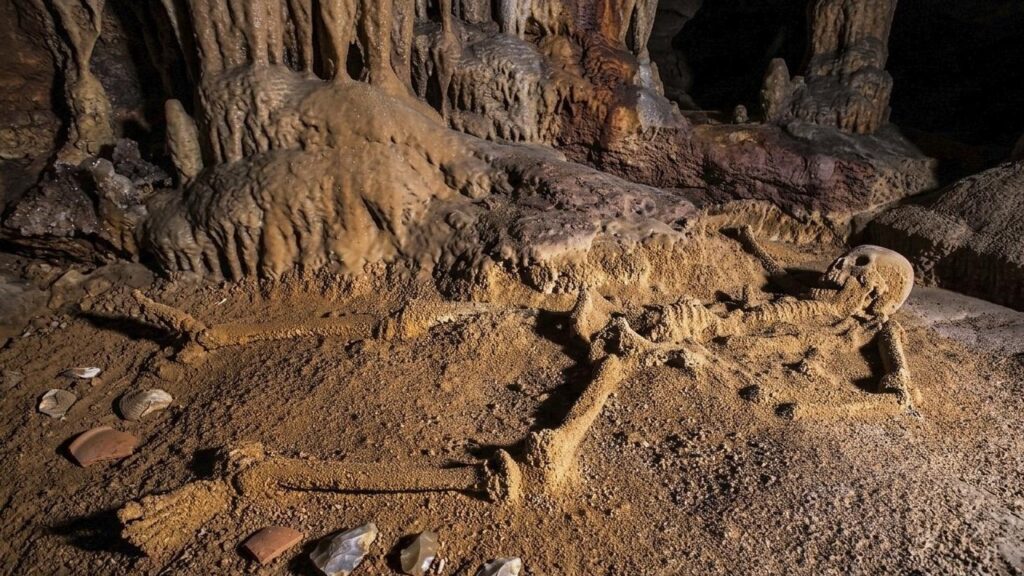
The most famous discovery inside ATM is the “Crystal Maiden” a skeleton of a young female, dating between 700–900 AD.
Due to the cave’s mineral-rich environment, her bones have calcified over time, giving them a shimmering appearance when light hits them.
Standing in front of her in total darkness except for your headlamp is humbling beyond words.
Cameras were banned after a visitor accidentally dropped equipment and damaged ancient remains.
The no-camera rule:
Protects fragile artifacts
Preserves human remains
Ensures long-term conservation
At first, I was disappointed. But being forced to fully experience the cave without distraction? It made it even more powerful.
Full day experience (6–8 hours total)
45-minute jungle hike
3 river crossings
Swimming into cave entrance
Walking, wading, climbing
About 3 hours inside the cave
Helmet + headlamp provided
Lunch after the tour
Difficulty level: 6/10
Physically demanding but doable for most active travelers.
Not recommended for:
Severe claustrophobia
Major mobility issues
Those uncomfortable with water
Life jackets available if needed.
MANDATORY:
Socks (required inside cave)
Closed-toe shoes
Bring:
Change of clothes
Towel
Water bottle (sealed)
Small snack in ziplock
Sunblock
Small backpack
You will get completely soaked.
San Ignacio is known for:
Xunantunich
Barton Creek
Caracol
Jungle lodges
Adventure tours
I signed up not fully knowing what I was getting into. Every description I read was vague “there’s a skeleton in a cave and you hike 45 minutes.”
That’s like saying “there’s a tree in the Amazon.”
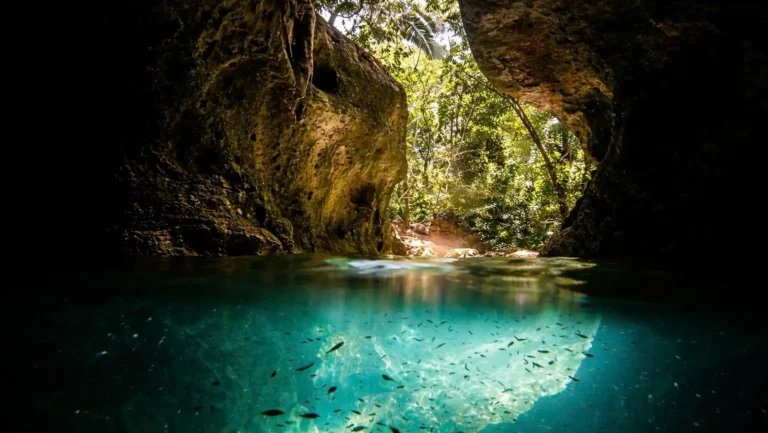
The day started with a jungle hike 45 minutes through Tapir Mountain Nature Reserve, crossing three rivers. The first crossing? Chest-deep cold water with a rope to pull yourself across. By the time we reached the cave entrance, I was soaked and wide awake.
Then came the moment.
Swimming into the cave entrance.
That first swim into darkness that was the scary part. Your headlamp bouncing off limestone walls. Cold water rising to your chest. Silence except for splashing.
Inside, it felt like an Indiana Jones film swimming, climbing, squeezing through tight passages (optional routes available), and navigating chambers that have remained untouched for over a thousand years.
My favorite part was the “Crystal Maiden”
The scariest moment? Climbing slippery rocks in near darkness, and squeezing my head through a small space. I felt as if I was going to get stuck but alas I made it through without a scratch. I would have been the Crystal Bachelor. But don’t mind me you are safe with a licensed guide who has done this thousands of times.
By the time we reached the ceremonial chamber, something shifted. You don’t just see history. You feel it.
Fascinated by Maya history
Love physical adventure
Want a once-in-a-lifetime experience
Curious why people fly to Belize just for this
Strong claustrophobia
Limited mobility
Not interested in archaeology
Prefer relaxed experiences (cave tubing may be better)
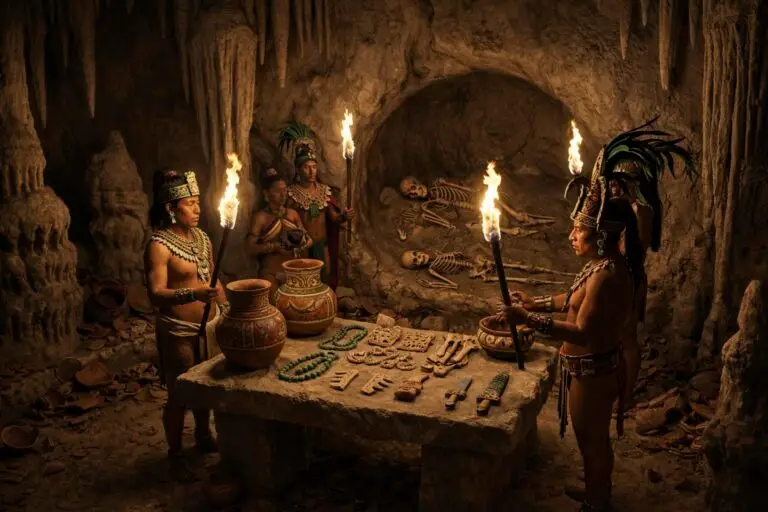
Based on archaeological findings and AI reconstruction renders I created, the ceremonial chamber would likely have been:
Lit by torchlight
Pottery arranged in ritual patterns
Shamans chanting
Victims prepared in sacred ceremony
The sound of dripping water echoing in darkness
It wasn’t just a cave.
It was a temple.
Most guided tours range from $125–$150 USD per person and include transportation, entrance fee, gear, and lunch.
Let us help get you the best price!
Moderate difficulty (6/10). It includes hiking, river crossings, swimming, and climbing inside the cave.
No. Cameras were banned to protect fragile artifacts and human remains.
Yes, when visited with a licensed guide. Safety gear and supervision are provided throughout the tour.
For me?
Absolutely.
I would rank this among the most intense, powerful experiences I’ve had so far.
ATM Cave isn’t just about seeing artifacts.
It’s about walking into the Maya underworld and walking back out changed.