Caracol
The Complete Guide to Belize’s Greatest Ancient City
Deep within the forests of the Maya Mountains lies one of the most important archaeological sites in the entire Maya world.
Long before modern Belize existed, before European ships crossed the Caribbean, and centuries before roads cut through the jungle, a powerful city rose among the hills of what is now western Belize.
That city was Caracol.
Today, most visitors know Caracol as a day trip from San Ignacio. They see the towering pyramid, walk through ancient plazas, and admire the incredible jungle scenery. Yet what many people do not realize is that Caracol was once one of the most powerful cities in the Maya world, a city that defeated rival kingdoms, controlled vast trade networks, and housed tens of thousands of people.
For those willing to make the journey into Belize’s interior, Caracol offers something few destinations can: the opportunity to stand in the center of a civilization that rivaled some of the greatest ancient cities on Earth.
Quick Facts About Caracol
- Location: Chiquibul Forest Reserve, Cayo District, Belize
- Distance from San Ignacio: Approximately 52 miles (84 km)
- Travel Time: Around 2 to 3 hours each way
- Established: Around 1200 BC
- Peak Population: Estimated 100,000–150,000 people
- Highest Structure: Caana (“Sky Palace”)
- Height of Caana: Approximately 141 feet (43 meters)
- Largest Maya site in Belize
- UNESCO World Heritage Tentative List
What Was Caracol Before It Became a Ruin?
Caracol was not simply a ceremonial site.
It was a city.
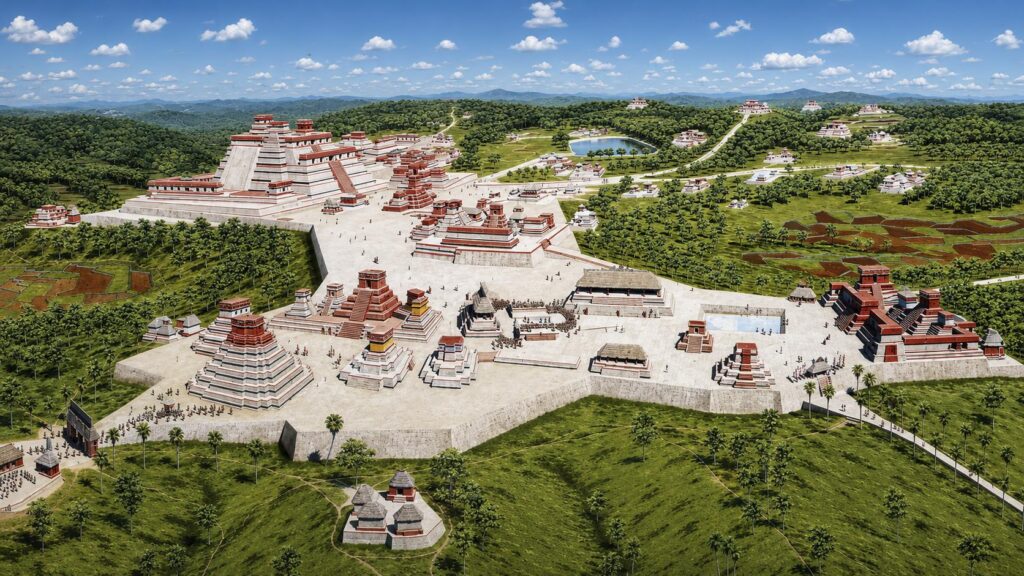
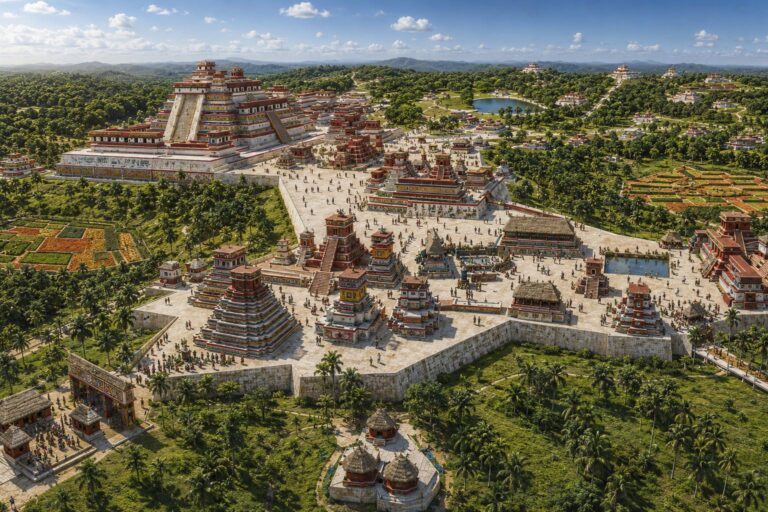
At its height, Caracol covered more than 68 square miles and contained:
- residential neighborhoods,
- marketplaces,
- reservoirs,
- agricultural terraces,
- administrative centers,
- temples,
- and extensive road systems.
Archaeologists believe Caracol may have had a population comparable to many major cities of the ancient world.
The Maya who lived here were not primitive jungle dwellers.
They were:
- engineers,
- astronomers,
- mathematicians,
- architects,
- merchants,
- warriors,
- and political strategists.
The city contained thousands of structures connected by an advanced network of elevated stone causeways known as sacbeob.
At its peak, Caracol dominated much of what is now Belize.
The Meaning of Caracol
The modern name “Caracol” means “snail” in Spanish.
The site received this name because early loggers reported hearing the sound of a snail shell trumpet echoing through the forest.
However, the ancient Maya name was likely Oxhuitza, which roughly translates to “Three Hills Water.”
This name appears in inscriptions found throughout the site and neighboring Maya kingdoms.
The Rise of a Maya Superpower
Caracol emerged as a significant city during the Early Classic period.
By the fifth and sixth centuries AD, it had become one of the most powerful kingdoms in the Maya Lowlands.
The city’s rulers expanded their influence through:
- military campaigns,
- strategic alliances,
- economic power,
- and control of trade routes.
Caracol’s rise demonstrates that the Maya world was not a peaceful collection of ceremonial cities.
It was a dynamic political landscape filled with competition, diplomacy, and warfare.
The Famous War Against Tikal
One of the most remarkable moments in Maya history occurred in AD 562.
At the time, Tikal in present-day Guatemala was considered one of the dominant powers in the Maya world.
Many scholars assumed Tikal was nearly unbeatable.
Then Caracol defeated them.
Through inscriptions and archaeological evidence, researchers discovered that Caracol launched a successful military campaign against Tikal, dramatically altering the balance of power throughout the region.
This victory shocked archaeologists because it showed that Caracol was not a secondary city.
It was a major superpower capable of defeating one of the most influential Maya kingdoms.
For over a century after this victory, Caracol maintained significant regional influence.
What Was Life Like in Ancient Caracol?
Life in Caracol was organized and sophisticated.
Families lived in residential compounds connected to agricultural terraces.
Farmers cultivated:
- maize,
- beans,
- squash,
- cacao,
- fruits,
- and medicinal plants.
The city had an extensive water management system that helped sustain its population during dry seasons.
Trade routes connected Caracol to neighboring kingdoms, bringing:
- jade,
- obsidian,
- ceramics,
- shells,
- and luxury goods.
Religious ceremonies played an important role in daily life, but Caracol was equally a political and economic center.
This was a functioning city, not merely a ceremonial destination.
Why Was Caracol Abandoned?
Like many Maya cities, Caracol experienced decline during the Terminal Classic period.
Between AD 800 and 900, populations began decreasing.
Several factors likely contributed:
- prolonged droughts,
- political instability,
- warfare,
- resource pressures,
- economic disruption.
The decline was gradual rather than sudden.
People did not disappear overnight.
Instead, generations slowly left the city as its power weakened.
By around AD 1050, Caracol had largely been abandoned.
The jungle eventually reclaimed the city.
Trees grew through plazas.
Roots split stone structures.
Nature slowly covered what had once been one of the greatest cities in the Maya world.
Rediscovery of Caracol
For centuries, Caracol remained hidden beneath dense rainforest.
Although local people and loggers knew of ruins in the area, the site remained largely undocumented.
In 1937, a mahogany logger named Rosa Mai reported the ruins to authorities.
This discovery sparked official archaeological interest.
When researchers arrived, they encountered a city almost entirely consumed by jungle.
Many structures were hidden beneath thick vegetation.
Monuments were scattered throughout the forest.
Ancient plazas had disappeared beneath centuries of growth.
The scale of Caracol was not immediately understood.
Only decades of excavation revealed its true significance.
The Road to Caracol: Then vs. Now
For many years, the road to Caracol was considered part of the adventure.
Older visitors remember:
rough conditions,
potholes,
washouts,
long travel times,
and seasonal challenges.
The route through the Mountain Pine Ridge Forest Reserve could become difficult during heavy rains.
Today, sections of the road have seen improvements, making access more manageable than in the past.
However, visitors should still expect:
a long drive,
changing road conditions,
remote stretches,
and slower travel speeds.
Most travelers choose:
guided tours,
rental vehicles with good clearance,
or organized transportation from San Ignacio.
The journey remains part of the experience.
What Can You See at Caracol Today?
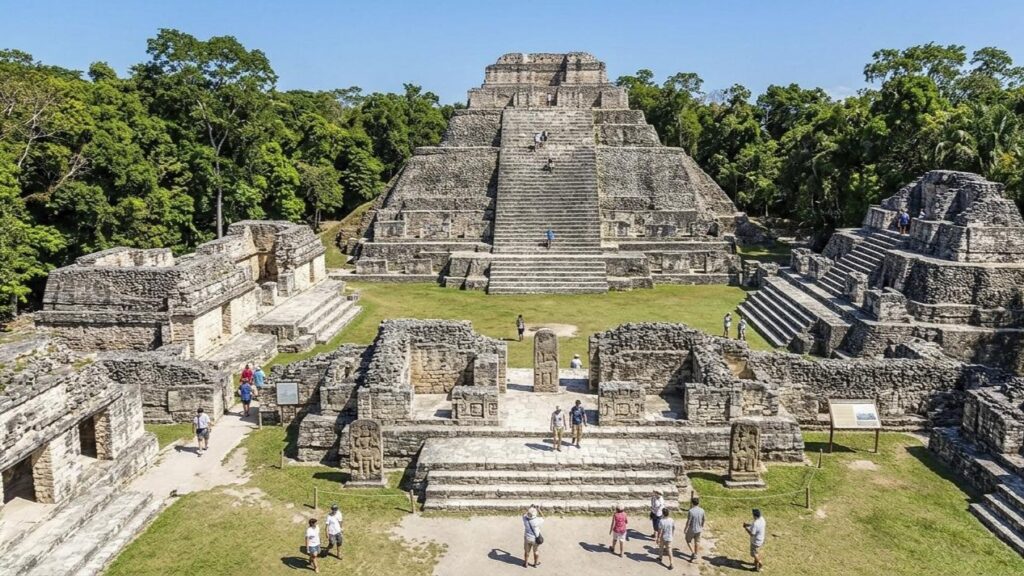
Caana (Sky Palace)
The most famous structure.
At 141 feet, Caana remains one of the tallest man-made structures in Belize.
Climbing to the top provides breathtaking views across the jungle canopy.
A Group Plaza
One of the site’s major ceremonial areas.
Visitors can see temples, plazas, and important architectural features.
Ball Courts
The Maya ballgame played a significant role in politics and ritual life.
Caracol contains several ball courts that demonstrate the importance of the sport.
Stelae and Altars
Carved monuments preserve historical records of rulers, battles, and important events.
These inscriptions helped archaeologists reconstruct Caracol’s history.
Entry Fees
Fees can change, so visitors should verify current pricing before traveling.
Typically:
Belizean Citizens
$15
Reduced local rates with identification.
Residents
$15
Discounted admission may apply.
International Visitors
$25
Higher visitor rates compared to local admissions.
Guided tours generally include:
- transportation,
- park fees,
- lunch,
- guide services.
Why Visit Caracol?
Many visitors ask:
“Why choose Caracol instead of Xunantunich or Altun Ha?”
The answer is scale.
Caracol offers:
- Belize’s largest Maya city,
- deeper archaeological significance,
- fewer crowds,
- incredible jungle scenery,
- a true adventure experience.
Unlike more accessible sites, Caracol still feels remote and wild.
You earn the experience.
And because of that, it often leaves a stronger impression.
Local Guide: Visiting Caracol
Leave Early
Most tours depart around 7:00 AM.
Bring Water
The interior can become very hot.
Wear Good Shoes
Uneven terrain is common.
Bring Bug Spray
Especially during wetter months.
Pack a Camera
The views from Caana are unforgettable.
Combine Nearby Attractions
Many visitors combine Caracol with:
- Rio Frio Cave,
- Big Rock Falls,
- Mountain Pine Ridge.
Final Thoughts
Caracol is not simply another Maya ruin.
It is evidence that ancient Belize was once home to one of the most powerful cities in the Maya world.
Long before modern borders existed, Caracol influenced politics, trade, warfare, engineering, and culture throughout the region.
For travelers seeking more than a photo opportunity, Caracol offers something rare:
A chance to walk through the remains of a civilization that changed the course of Maya history.
And deep in the forests of Belize, that history is still waiting to be explored.
Caracol is reached by road from San Ignacio through the Mountain Pine Ridge Forest Reserve. Most visitors go with guided tours or 4×4 vehicles due to remote road conditions.
It takes approximately 2 to 3 hours one way from San Ignacio, depending on road conditions and weather.
Parts of the route have been improved over time, but sections can still be rough, especially during the rainy season. A high-clearance vehicle is recommended.
Caracol is famous for being the largest Maya archaeological site in Belize and for its powerful ancient kingdom that once rivaled cities like Tikal.
Caana, also known as the “Sky Palace,” is the tallest structure at Caracol and one of the highest man-made buildings in Belize.
Caracol was gradually abandoned between AD 800 and 1050 during the collapse of the Classic Maya civilization.
Explore Belize's Ancient World with Us
At Authentically Belize, we believe understanding Belize means understanding the civilizations that came before us.
Discover more archaeological sites, hidden stories, cultural experiences, and local insights throughout Belize at AuthenticallyBelize.com. Share your experience with us 🙂
One Response